The Geminid meteor shower peaks on the night of December 13-14, 2026, and it is the year's best chance to see shooting stars without any equipment. A thin waxing crescent Moon sets in the evening that night, so the sky is dark for the best part of the shower. Under dark skies, expect around 40 to 50 meteors an hour, according to NASA.
Three more events share the month: the winter solstice on December 21, a supermoon called the Cold Moon on the night of December 23-24, and a weak meteor shower, the Ursids, that the bright Moon will mostly wash out. This guide lists them in date order, then explains how and where to look. Times are in Eastern Time (ET, which is Eastern Standard Time in December and 5 hours behind UTC) with UTC beside them.
December 2026 sky calendar
The table gives the date, the time in ET and UTC, and what happens.
| Date (2026) | ET | UTC | Event |
|---|---|---|---|
| Dec 1 | 1:08 a.m. | 06:08 | Last Quarter Moon (half lit, near Mars and Jupiter after midnight) |
| Dec 8 | 7:51 p.m. | Dec 9, 00:51 | New Moon |
| Dec 13-14 | All night, best around 2 a.m. | All night | Geminid meteor shower: best night for North America (predicted maximum Dec 14, 9 a.m. ET / 14:00 UTC) |
| Dec 17 | 12:42 a.m. | 05:42 | First Quarter Moon (near Saturn after sunset that evening) |
| Dec 21 | 3:50 p.m. | 20:50 | December solstice (winter solstice in the Northern Hemisphere) |
| Dec 22 | 5 p.m. (predicted) | 22:00 | Ursid meteor shower maximum, with a nearly full Moon (try the nights of Dec 21-22 and 22-23) |
| Dec 23 | 8:28 p.m. | Dec 24, 01:28 | Full Cold Moon (supermoon) |
| Dec 24 | 4:30 a.m. | 08:30 | Moon closest to Earth for the month |
| Dec 26-28 | Around midnight | Around 05:00 (next day) | Moon near Jupiter and Mars in Leo |
| Dec 30 | 1:59 p.m. | 18:59 | Last Quarter Moon |
Other time zones: subtract 1 hour from the ET times for Central, 2 for Mountain, 3 for Pacific and 4 for Alaska. The solstice, for example, is at 2:50 p.m. CT, 1:50 p.m. MT, 12:50 p.m. PT and 11:50 a.m. in Alaska. The Cold Moon turns full at 5:28 p.m. PT on December 23.
Geminid meteor shower: peak night December 13-14
The Geminids are a meteor shower whose meteors seem to fly out of the constellation Gemini, near the bright star Castor. They are active in early December, with NASA listing December 4 to 17, and NASA gives the peak as the night of December 13-14, 2026.
The International Meteor Organization (IMO) predicts the exact maximum for about 14:00 UTC on December 14, which is 9 a.m. ET, in daylight for the Americas. The Geminid peak is broad, with high rates for about 10 to 12 hours, so the night of December 13-14 is the one to pick in North America, and the night of December 14-15 is worth a try too.
The radiant, the point the meteors appear to spread from, rises in mid-evening and is highest around 2 a.m. local time. The Geminids start around 9 or 10 p.m., which makes them a good shower for children and for anyone who does not want to stay up all night. The best hours are from about 10 p.m. until dawn, and the most meteors usually fall around 2 a.m.
The Moon helps this year. In New York, the Moon is about 19 to 28 percent lit on December 13 and 14 and sets at 8:42 p.m. and 9:45 p.m. After that the sky is moonless.
Rates depend on your sky. The figure astronomers quote, the zenithal hourly rate, assumes a perfectly dark sky with the radiant overhead: NASA says up to 120 Geminids an hour can be seen under perfect conditions, and the IMO lists a peak rate of 150. Real skies give fewer. NASA says to expect about 40 to 50 an hour under dark skies, and far fewer from a suburb.
You do not need a telescope or binoculars, which show only a small patch of sky. Lie back on a reclining chair or blanket, look at the darkest part of the sky and let your eyes take in as much sky as you can. Meteors appear in all directions, and tracing one backward leads to the radiant.
Why Geminids come from an asteroid, not a comet
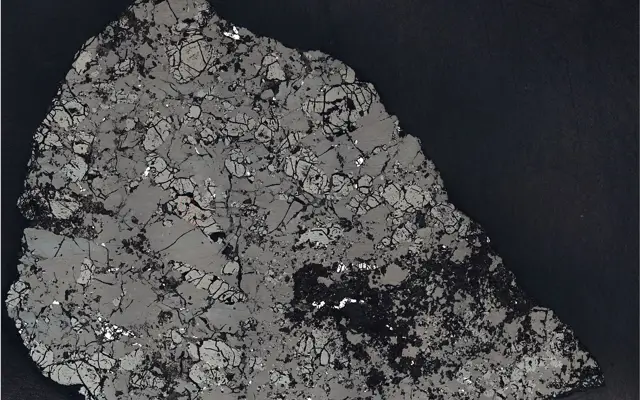
The Geminids come from 3200 Phaethon, an asteroid about 5.1 km across that was discovered in 1983 by the Infrared Astronomical Satellite (IRAS). Most meteor showers come from comets, which shed dust as they warm. The Geminids are unusual because their source looks like a rock.
Phaethon swings in to about half of Mercury's distance from the Sun. Because it sheds dust like a comet but looks like an asteroid, astronomers have suggested it may be a new kind of object, a "rock comet".
The grains hit Earth's atmosphere at about 22 miles (35 km) per second and burn up as bright, fast meteors that tend to look yellow. The shower has grown over time: when it first appeared in the mid-1800s it produced only 10 to 20 meteors an hour. Japan's DESTINY+ spacecraft is expected to launch in 2028 and reach Phaethon around 2030.
Winter solstice 2026: December 21 at 3:50 p.m. ET
The December solstice happens on Monday, December 21, 2026, at 20:50 UTC, which is 3:50 p.m. ET. It marks the shortest day of the year in the Northern Hemisphere and the longest day in the Southern Hemisphere.
It happens because Earth's axis is tilted. On this date the Northern Hemisphere is tilted farthest from the Sun, so the Sun's path across the sky is at its lowest and shortest, and the days are at their shortest. After the solstice, the days start to lengthen again.
Day length on December 21, 2026 varies a lot across the US, according to timeanddate.com:
| City | Sunrise | Sunset | Daylight |
|---|---|---|---|
| Miami, FL | 7:03 a.m. | 5:34 p.m. | 10 h 31 min |
| Los Angeles, CA | 6:54 a.m. | 4:47 p.m. | 9 h 53 min |
| New York, NY | 7:16 a.m. | 4:31 p.m. | 9 h 15 min |
| Chicago, IL | 7:14 a.m. | 4:22 p.m. | 9 h 7 min |
| Anchorage, AK | 10:13 a.m. | 3:41 p.m. | 5 h 27 min |
Anchorage gets about 5 hours of daylight, while Miami gets more than 10.
Cold Moon 2026: a supermoon on December 23-24
The December full Moon, traditionally called the Cold Moon, is exactly full at 8:28 p.m. EST on Wednesday, December 23, 2026, which is 01:28 UTC on December 24. It is also a supermoon: a full Moon that happens near perigee, the point where the Moon is closest to Earth. The Moon reaches perigee about seven hours later, at 4:30 a.m. EST (08:30 UTC) on December 24.
The Moon rises around sunset and looks full on the nights of December 22, 23 and 24. In New York, the Moon is about 94 percent lit on December 21, 98.6 percent on December 22 and 99.9 percent on December 24. A full Moon is bright, so it washes out faint stars and meteors. It is a good night for looking at the Moon itself.
Ursid meteor shower: December 22, and the Moon spoils it
The Ursids are a minor meteor shower that comes from the comet 8P/Tuttle. The IMO predicts its 2026 maximum for December 22 at 22:00 UTC (5 p.m. ET), so the nights of December 21-22 and 22-23 are the ones to try. Under ideal skies it gives roughly 10 meteors an hour, and the Moon, about 96 percent lit, makes that a lot lower this year.
If you want to try, look away from the Moon and expect to see only a few of the brightest meteors.
Planets in December 2026
Saturn is the planet to look for in the evening, and Venus is the brightest planet in the morning sky. Mars and Jupiter sit in the east and southeast in the second half of the night, close together in the sky.
- Venus: a very bright planet low in the southeast before sunrise. After the Sun and Moon, it is the brightest natural object in the sky.
- Saturn: in the south in the evening after dusk. It looks like a steady, bright star.
- Mars and Jupiter: close together in the constellation Leo, in the southeast after midnight at the start of the month and rising earlier as the month goes on. Jupiter is much the brighter of the two.
- Uranus and Neptune: too faint to see without binoculars or a telescope.
The Moon makes planet-spotting easier on a few dates. On December 17, the half-lit Moon sits to the right of Saturn after sunset, and on December 18 the Moon is above Saturn. From December 26 to 28 the bright Moon passes Jupiter and Mars around midnight, closest to Jupiter on December 27 and to Mars on December 28.
How to see the International Space Station
The International Space Station (ISS) is an orbiting laboratory that looks like a very bright star or an airplane without flashing lights, and it travels at about 17,500 mph (28,000 km/h). You can see it with the naked eye in the hours around sunrise and sunset, when the Sun lights the station against a dark sky.
NASA's free Spot the Station app lists the upcoming sightings for the location you choose. For each one it tells you where the station appears, where it disappears, how high it climbs and how long it stays above the horizon. It orbits about 16 times a day.
How to watch: tips for a good night
- Find a dark sky. Move away from streetlights. A light-pollution map shows the nearest dark spot; parks and fields away from towns are good.
- Give your eyes 20 to 30 minutes. Eyes need about 20 minutes to adapt to darkness. Each look at a phone screen resets some of that.
- Dress for the cold. December nights are cold. Bring a sleeping bag, a blanket and a hot drink.
- Be patient. Watch for at least an hour. Meteors come in bursts and gaps.
- Skip the telescope. Meteors cover a wide area of sky, so your eyes work best.