Skip to content

How a 220-Ton Egyptian Obelisk Crossed Manhattan in 112 Days

Cleopatra’s Needle, a granite obelisk weighing about 220 tons, took 112 days to travel from Manhattan’s Hudson River landing to its Central Park site. Workers used pontoons, a special railway and hauling equipment to move the ancient stone.

A tall stone obelisk stands among trees in Central Park.
Image: Edmund F. Arras / Wikimedia Commons, Public domain

Getting it off the ship, ashore and across the city called for a sequence of carefully arranged engineering steps.

The 3,500-Year-Old Obelisk, Precisely

Cleopatra’s Needle was carved around 1425 BCE at Heliopolis in ancient Egypt. It is a single piece of granite quarried at Aswan.

The obelisk stands about 69 feet tall and weighs about 220 tons. Moving it across Manhattan meant transporting one enormous block of stone, rather than a structure that could be taken apart and carried in pieces.

How the Obelisk Travelled

The obelisk travelled from Alexandria to New York aboard the wooden cargo ship Dessoug. To load the stone, workers cut an opening in the ship’s hull, removing about 7,000 rivets, 16 frames and 30 plates.

At the Manhattan landing, pontoons lifted the obelisk as the tide rose. When the tide fell, the stone was lowered onto a prepared landing stage. A special railway and hauling apparatus then carried it from the Hudson River to its Central Park site.

How We Know What Happened

Henry Honychurch Gorringe, who led the move, published his account in Egyptian Obelisks in 1882. He also presented a paper on removing, transporting and re-erecting the obelisk to the American Society of Civil Engineers in 1881.

The journey from the Manhattan landing to the Central Park site took 112 days and ended on January 5, 1881. The route from the Hudson River to the site measured 10,905 feet.

Why the Move Was Remarkable

The Egyptian government gifted the obelisk to the United States, and it was installed in Central Park in 1881. Workers raised it upright on January 22, 1881, completing the final stage of the move.

The final turn, from the first signal until the obelisk stood upright, took five minutes. The result was a permanent public monument: the Central Park obelisk is New York City’s oldest outdoor monument.


Key facts

Weight
About 220 tons
Height
About 69 feet
Overland journey
112 days, ending January 5, 1881
Recorded route
10,905 feet from the Hudson River to the Central Park site
Raised upright
January 22, 1881

Questions people ask

How long did it take to move Cleopatra’s Needle across Manhattan?

The journey from the Manhattan landing to the Central Park site took 112 days and ended on January 5, 1881.

How was Cleopatra’s Needle moved through New York?

Workers used pontoons to transfer it from the waterfront to a landing stage, then moved it inland on a special railway with hauling apparatus.

How heavy is Cleopatra’s Needle in Central Park?

The granite obelisk weighs about 220 tons and stands about 69 feet tall.

When was Cleopatra’s Needle raised upright in Central Park?

Workers raised it upright on January 22, 1881. Gorringe’s account says the final turn took five minutes from the first signal.

Sources

  1. Obelisk (Cleopatra’s Needle) — Central Park Conservancy · centralparknyc.org
  2. How the Obelisk Made Its Home in Central Park — Central Park Conservancy · centralparknyc.org
  3. The New York Obelisk, or How Cleopatra’s Needle Came to New York and What Happened When It Got Here — The Metropolitan Museum of Art · resources.metmuseum.org
  4. How “Cleopatra’s Needle” Was Brought to America — U.S. Naval Institute Proceedings · usni.org
  5. The Obelisk (Cleopatra’s Needle) — New York City Design Commission · nyc.gov

More in Wow Facts

All 36 articles

Why Bare-Nosed Wombats Make Cube-Shaped Poo

Bare-nosed wombat faeces form cubes in the last 17 per cent of the intestine. Differences in gut-wall stiffness, muscle contractions and drying help create their corners and regular shape.

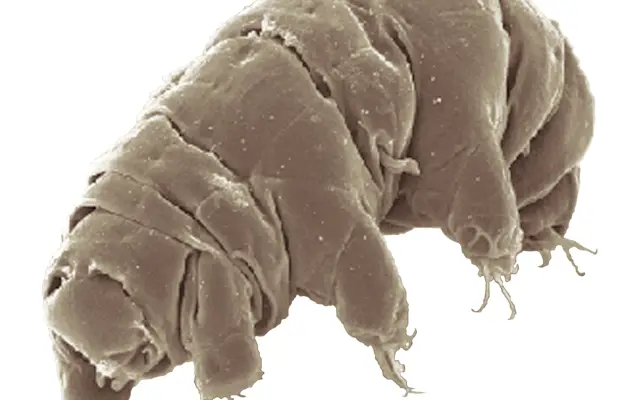
How Tardigrades Survived Ten Days in the Vacuum of Space

Two species of dried tardigrade survived ten days in space vacuum during a 2007 orbital experiment. Solar ultraviolet radiation sharply reduced survival, showing that the result did not make tardigrades invulnerable to space.