A natural satellite is a body that orbits a planet. Mean diameter provides one way to compare the sizes of these moons.
How This List Is Ranked
NASA/JPL Solar System Dynamics lists mean radii for planetary satellites, including Earth’s Moon and moons of Jupiter, Saturn, Uranus and Neptune. A diameter is twice a radius, so each listed mean radius is doubled to calculate the mean diameter.
The ranking uses mean diameter in kilometres, based on NASA/JPL Solar System Dynamics mean radii accessed in 2026.
10. Oberon
1,522.8 km Mean diameter
- Parent planet
- Uranus
- Mean radius
- 761.4 km
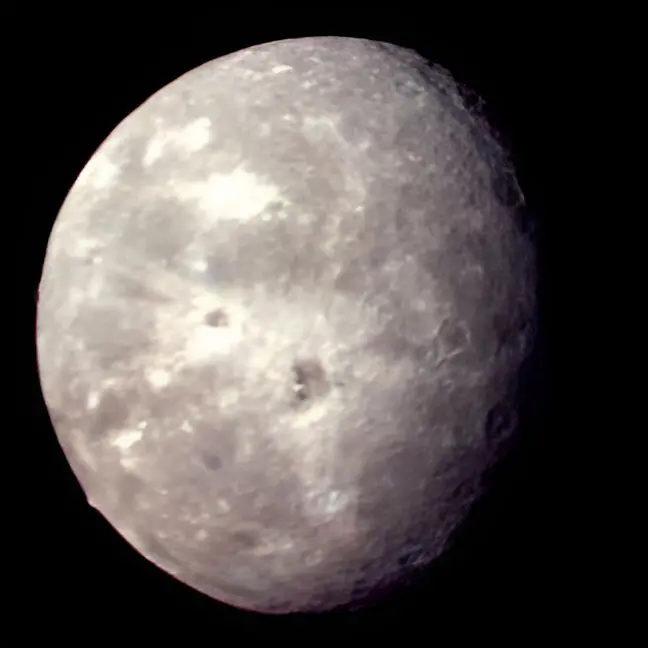
Oberon has a mean radius of 761.4 km, giving it a mean diameter of 1,522.8 km. Oberon is Uranus’s second-largest moon and the tenth-largest natural satellite in this ranking. At least one mountain on Oberon is about 6 km high. Rhea ranks ninth at 1,527.0 km, just above Oberon by mean diameter.
9. Rhea
1,527.0 km Mean diameter
- Parent planet
- Saturn
- Mean radius
- 763.50 km
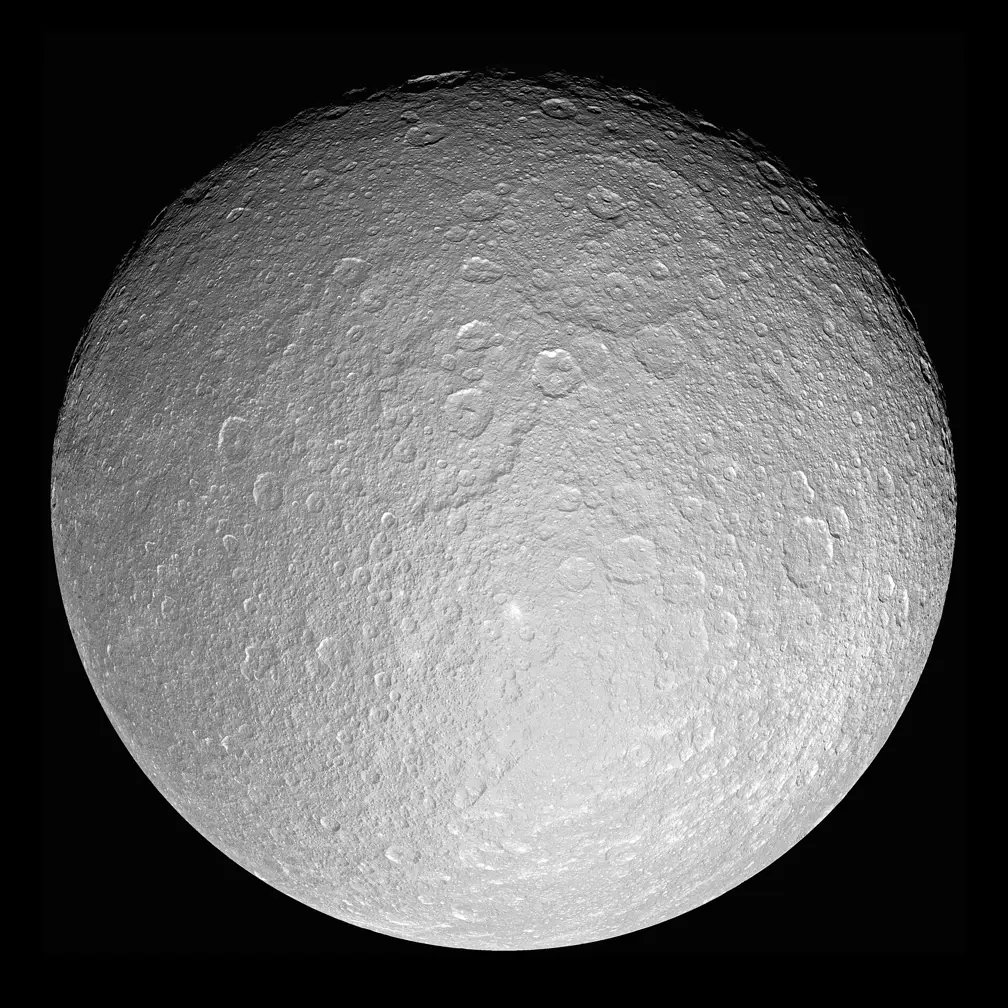
Rhea orbits Saturn and is Saturn’s second-largest moon. Its mean radius is 763.50 km, giving it a mean diameter of 1,527.0 km. Rhea completes an orbit around Saturn in about 4.5 Earth days. It ranks ninth in the list by mean diameter, just above Oberon, whose mean diameter is 1,522.8 km.
8. Titania
1,577.8 km Mean diameter
- Parent planet
- Uranus
- Mean radius
- 788.9 km
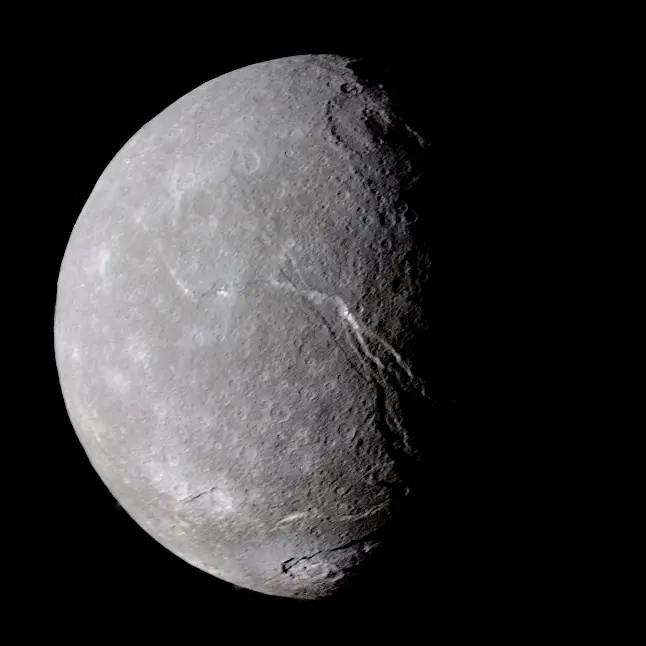
Titania has a mean radius of 788.9 km, giving it a mean diameter of 1,577.8 km. Titania is the largest moon of Uranus and ranks eighth among natural satellites by mean diameter. Some of Titania’s fault valleys—long depressions formed along cracks in the surface—are nearly 1,609 km long. Rhea and Oberon are smaller, at 1,527.0 km and 1,522.8 km respectively.
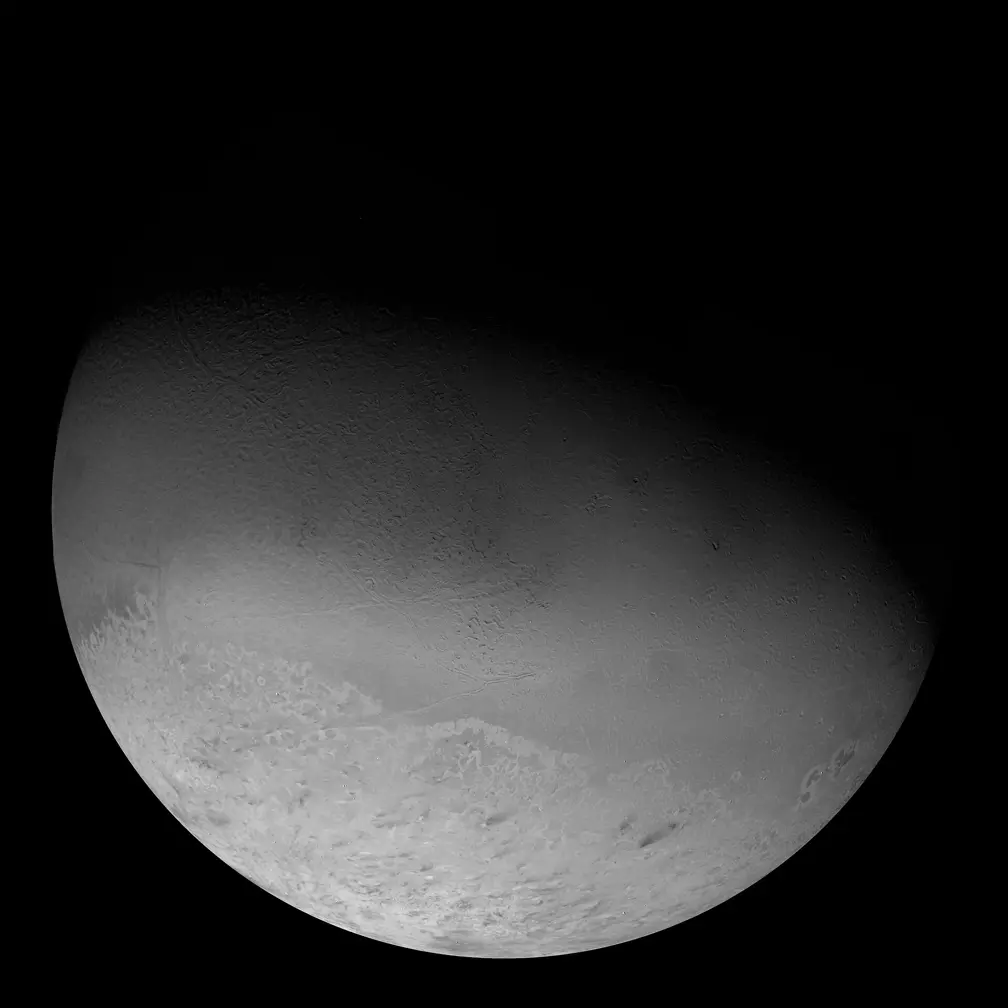
7. Triton
2,705.2 km Mean diameter
- Parent planet
- Neptune
- Mean radius
- 1,352.60 km
Triton is Neptune’s largest moon, with a mean radius of 1,352.60 km and a mean diameter of 2,705.2 km. It is the only large moon in the Solar System known to orbit its planet in the direction opposite to the planet’s rotation. Scientists think Neptune captured Triton, which may once have been an object in the Kuiper Belt.
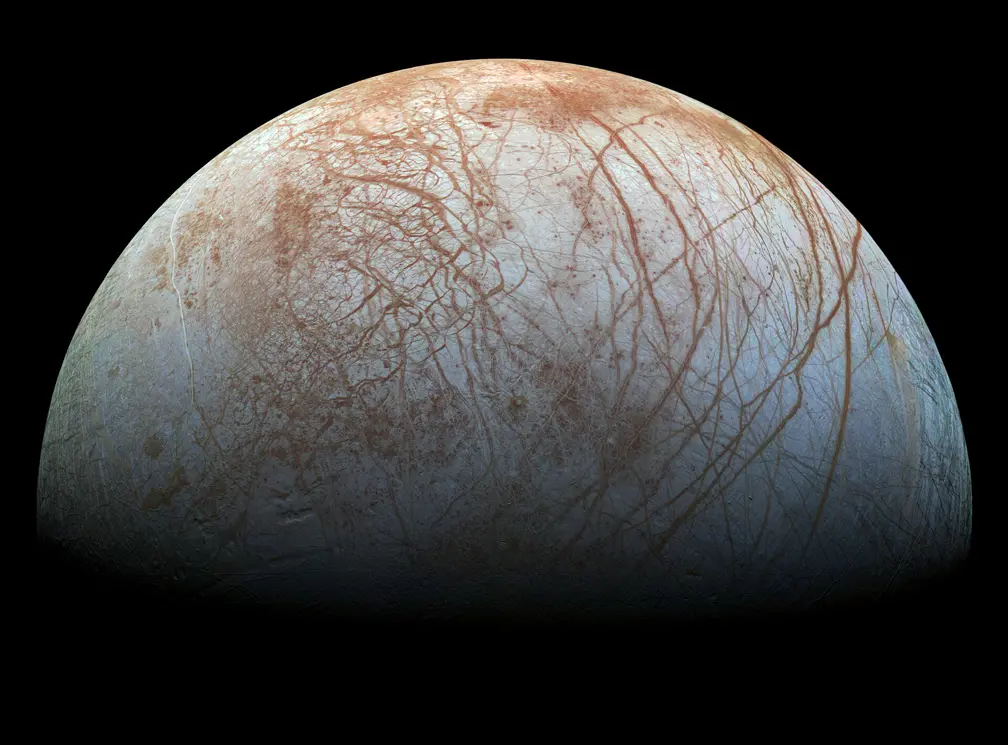
6. Europa
3,121.6 km Mean diameter
- Parent planet
- Jupiter
- Mean radius
- 1,560.80 km
Europa is the smallest of Jupiter’s four largest moons, but its mean diameter still reaches 3,121.6 km. Evidence suggests a global saltwater ocean lies beneath its icy surface, and NASA describes that suspected ocean as containing about twice as much water as Earth’s global ocean.
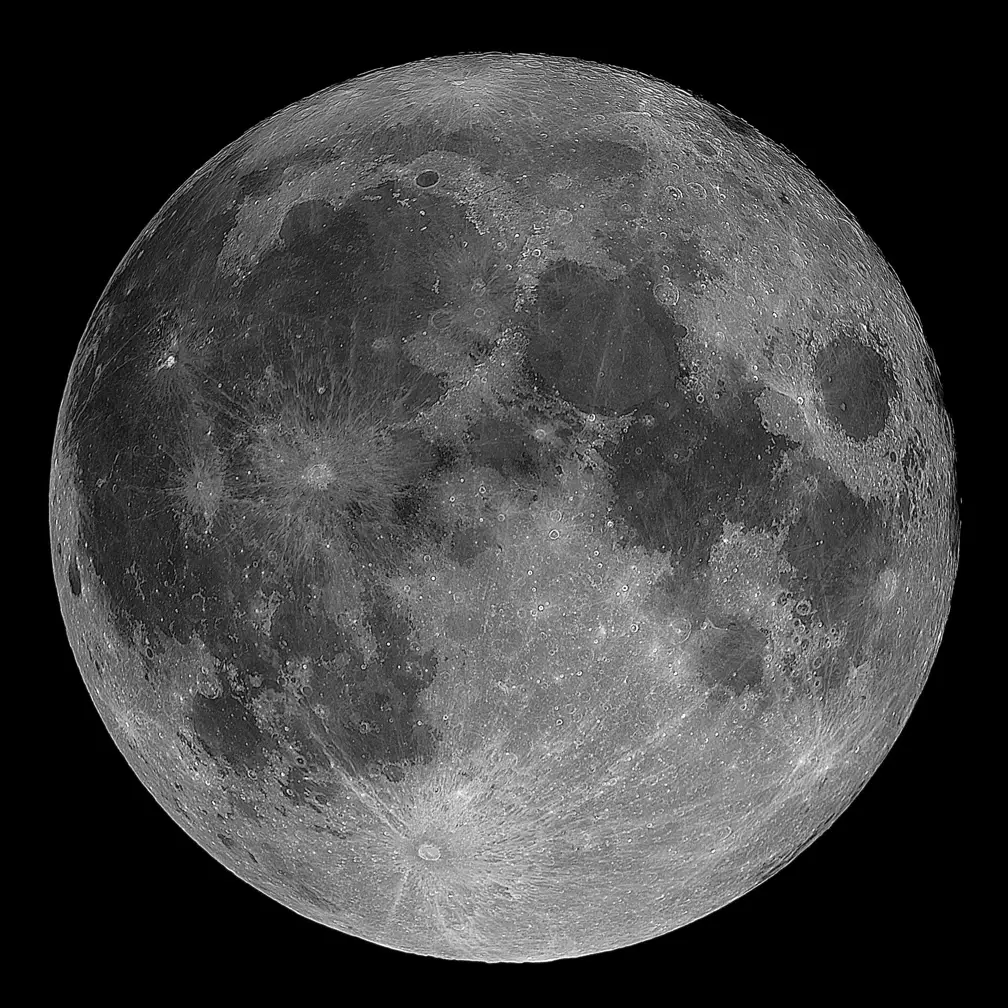
5. Earth’s Moon
3,474.8 km Mean diameter
- Parent planet
- Earth
- Mean radius
- 1,737.4 km
Earth’s Moon ranks fifth in the list. Its mean radius is 1,737.4 km, giving it a mean diameter of 3,474.8 km. It is Earth’s only natural satellite. The Moon is also the only celestial body beyond Earth that human beings have visited so far, giving it a unique place in human exploration.
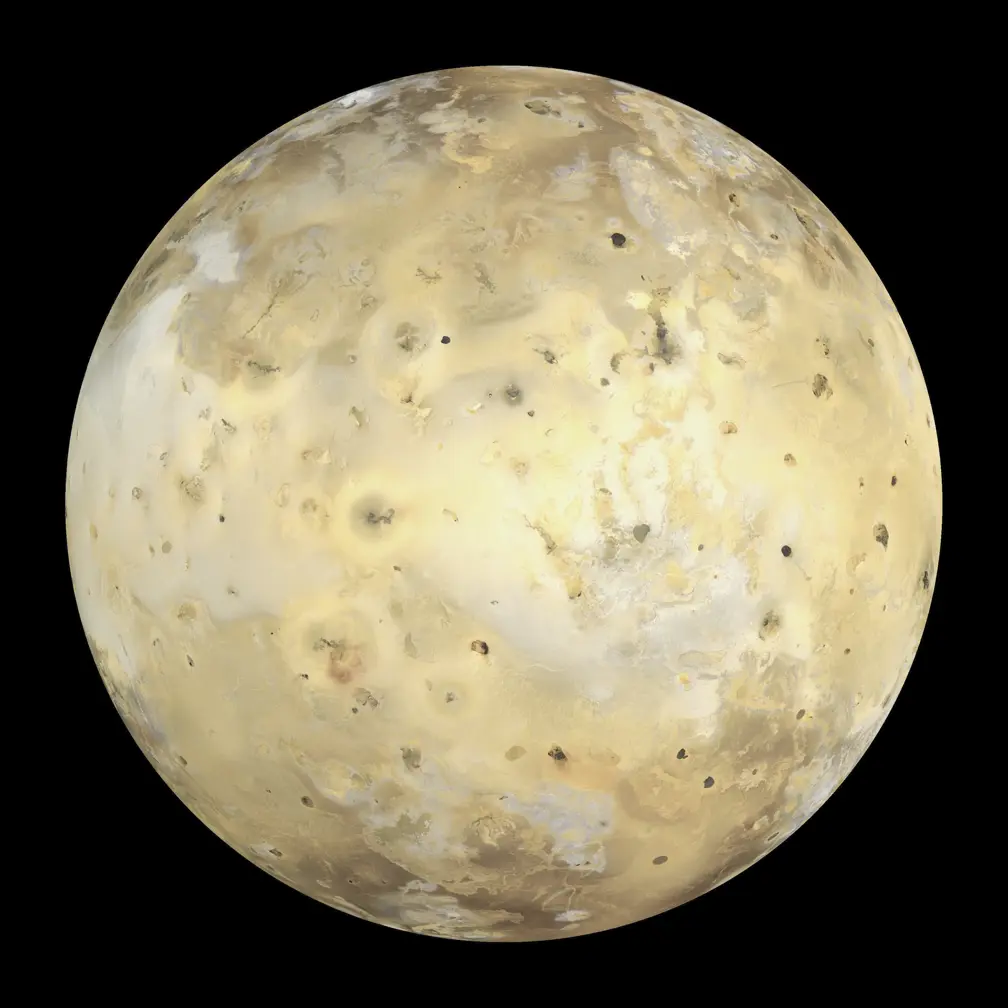
4. Io
3,643.0 km Mean diameter
- Parent planet
- Jupiter
- Mean radius
- 1,821.49 km
Io orbits Jupiter and is the most volcanically active world in the Solar System. Its mean radius is 1,821.49 km, giving it a mean diameter of 3,643.0 km. Jupiter’s tidal forces—the changing pull exerted across Io—can make its solid surface bulge by as much as 100 m. Io ranks fourth by mean diameter.
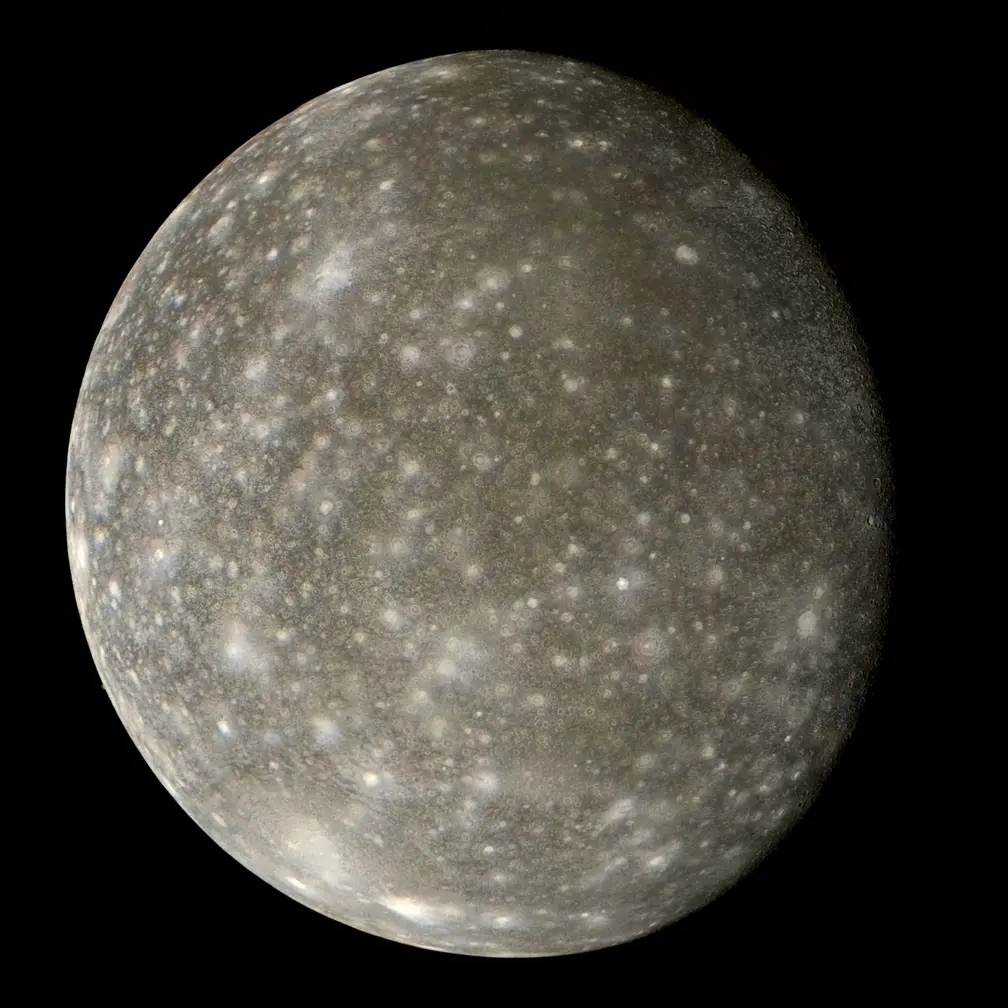
3. Callisto
4,820.6 km Mean diameter
- Parent planet
- Jupiter
- Mean radius
- 2,410.30 km
Callisto has a mean radius of 2,410.30 km, giving it a mean diameter of 4,820.6 km. Callisto orbits Jupiter and is the third-largest moon in the Solar System. Callisto’s surface is about 4 billion years old and is the oldest and most heavily cratered in the Solar System.
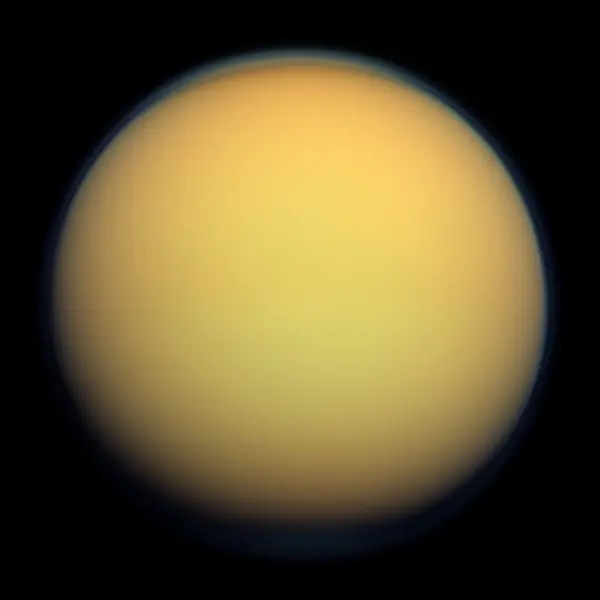
2. Titan
5,149.5 km Mean diameter
- Parent planet
- Saturn
- Mean radius
- 2,574.76 km
Titan orbits Saturn and is its largest moon. Its mean radius is 2,574.76 km, giving it a mean diameter of 5,149.5 km, the second-largest in this ranking. Titan is the only moon in the Solar System with a thick atmosphere. Its surface has lakes and rivers of liquid methane and ethane.
And the largest moon in the Solar System is…
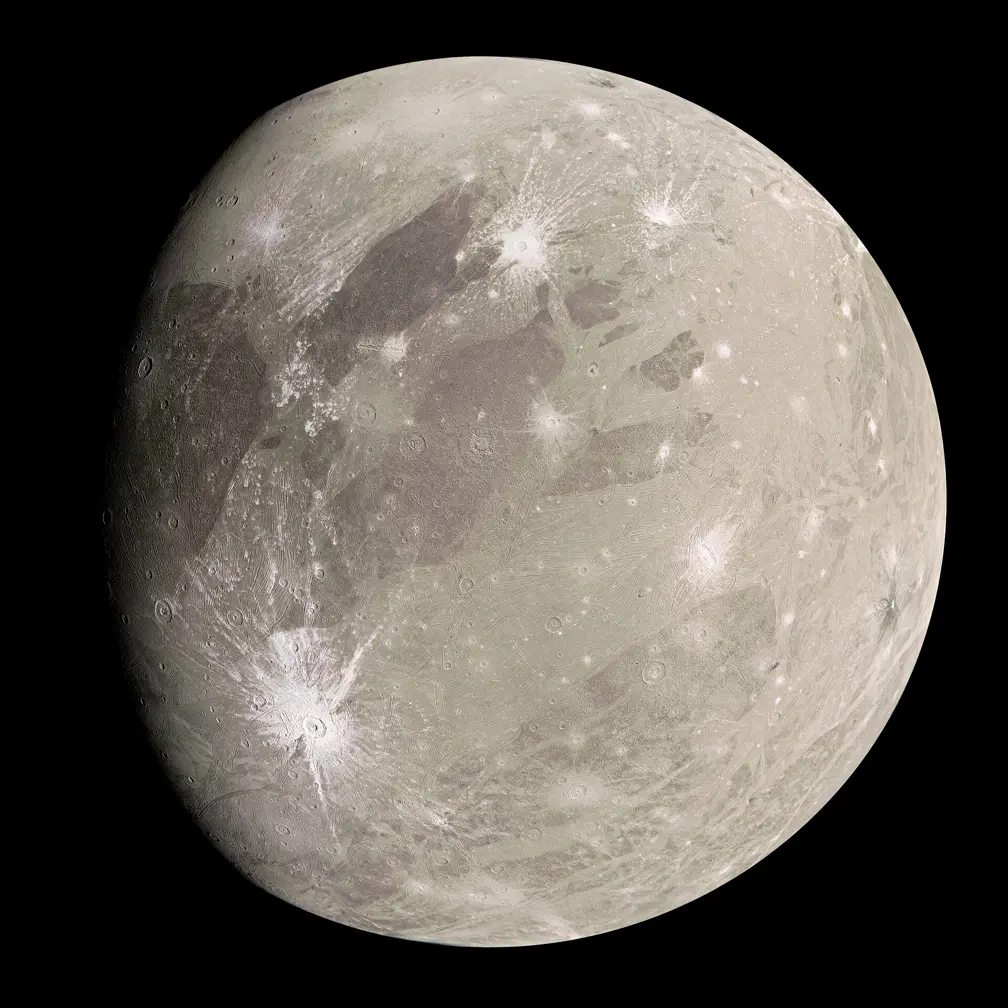
1. Ganymede
5,262.4 km Mean diameter
- Parent planet
- Jupiter
- Mean radius
- 2,631.20 km
Ganymede’s mean radius is 2,631.20 km, giving it a mean diameter of 5,262.4 km. Ganymede is the largest moon in the Solar System. It is larger than Mercury. Ganymede is also the only moon known to have its own magnetic field. Titan ranks second at 5,149.5 km in mean diameter.
The Full Ranking
| Rank | Moon | Parent planet | Mean diameter |
|---|---|---|---|
| 1 | Ganymede | Jupiter | 5,262.4 km |
| 2 | Titan | Saturn | 5,149.5 km |
| 3 | Callisto | Jupiter | 4,820.6 km |
| 4 | Io | Jupiter | 3,643.0 km |
| 5 | Earth’s Moon | Earth | 3,474.8 km |
| 6 | Europa | Jupiter | 3,121.6 km |
| 7 | Triton | Neptune | 2,705.2 km |
| 8 | Titania | Uranus | 1,577.8 km |
| 9 | Rhea | Saturn | 1,527.0 km |
| 10 | Oberon | Uranus | 1,522.8 km |