The Philippines has what is widely called the longest Christmas season in the world: it runs from September 1 to the first week of January, more than four months. Marot Nelmida-Flores, a professor of Philippine studies at the University of the Philippines Diliman, told CNBC that "Christmas fever starts on Sept. 1 and ends the first week of January." No official body keeps a record, so "longest" is a common description rather than a ranking.
Two things help explain it. The islands were under Spanish colonial rule for more than 300 years, which planted Christmas customs that are still going. And according to the 2020 census, almost 80 percent of Filipinos, more than 85 million people, identify as Roman Catholic.
What Are the "Ber Months"?
The "ber months" are September, October, November and December, the four months whose names end in "-ber." In the Philippines, Christmas is celebrated across all four of them.
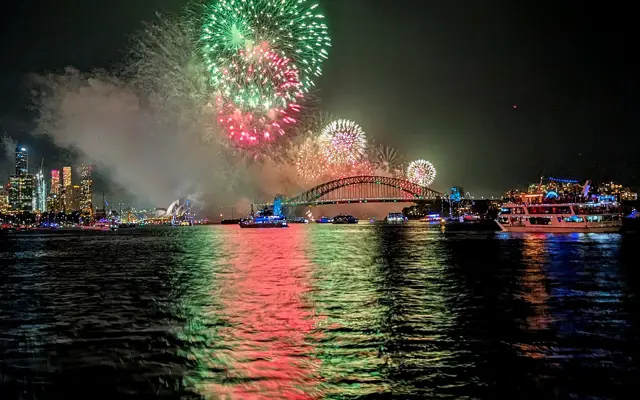
Supermarkets and public spaces play Jose Mari Chan's "Christmas in Our Hearts," a song CNN calls the country's answer to Mariah Carey's "All I Want for Christmas Is You." Filipinos start making parol lanterns as early as September, and from November, Manila's Bonifacio Global City (BGC) district puts on a weekly fireworks display.
What Is Simbang Gabi?
Simbang Gabi is a series of nine Masses held before dawn or at night from December 16 to December 24. In 2026 that means every day from Wednesday, December 16, to Thursday, December 24. Some services begin as early as 2:30 a.m., CNN reports.
The custom is thought to have been brought by Spanish missionaries in the 17th century. Masses were held so early so that farmers, who started work in the fields before sunrise, could attend. The last Mass, on Christmas Eve, is called the Misa de Gallo, Spanish for "Rooster's Mass."
Many people believe that if they complete all nine Masses, the wish or petition they make will come true. Two traditional treats of the season are bibingka, rice cakes charred on top and underneath, and puto bumbong, purple rice cakes steamed in bamboo tubes and topped with butter, grated coconut and sugar.
What Is a Parol?
A parol is a Philippine Christmas lantern shaped to look like the Star of Bethlehem. Traditional parols are made of paper and bamboo.
Today parols range from small star lanterns on homes to huge electric displays, and Filipinos start making them as early as September, according to Nelmida-Flores.
What Is the Giant Lantern Festival?
The Giant Lantern Festival is a contest held in mid-December each year in the city of San Fernando, in Pampanga province. You can read more about it in our strange Christmas traditions around the world.
AFP reported that the tradition grew out of "nighttime processions held by Spanish friars." The giant lanterns tower about 6 meters (20 feet) high, can weigh up to a metric ton and use 12,000 bulbs synchronized by 15 kilometers (about 9 miles) of electric cable.
The 2025 contest was held on Saturday, December 13, at Robinsons Starmills Pampanga, with 10 barangays (city districts) taking part. The festival is held in mid-December, so watch the City of San Fernando's announcements for the 2026 date.
When Does the Philippine Christmas Season End?
The Christmas season in the Philippines ends in the first week of January, according to Nelmida-Flores. That makes the full run from September 1 more than four months long.
Why Does the Season Last So Long?
The season lasts so long because Christmas is a religious feast, a family holiday and a national tradition at once. More than three centuries of Spanish rule left customs such as the dawn Masses, and the Philippines is home to Asia's largest Catholic population.
Family is the other driver. CNN reports that families prepare all season for their annual holiday reunions, and that almost 10 percent of the Philippine workforce is employed abroad, according to the International Labour Organization.