"Silent Night" tops this list of the 10 best-loved Christmas carols, and its story is the most surprising: the words were written in 1816, the tune in 1818, and it was first sung on Christmas Eve 1818 in a small church in Oberndorf, Austria. The ranking is an editors' judgment based on how long each carol has lasted and how much real history it carries. It is not a vote or a sales chart.
These are traditional carols, meaning songs and hymns with a Christmas theme that have been sung for generations. Secular Christmas songs such as "Jingle Bells" (1857) belong to a different family and are not ranked here.
10. Away in a Manger
Words: anonymous, first printed 1882 | With music: 1885 | Language: English
"Away in a Manger" is a lullaby carol that was long credited to the German reformer Martin Luther, but that credit is false. No text in Luther's known writings matches it, and no German version is known from before 1934.
The words first appeared on 2 March 1882 under the heading "Luther's Cradle Song." The first known printing with music came in 1885, in a Lutheran Sunday school book that did not name Luther as the author. In 1887 the composer James R. Murray printed his own tune as "Luther's Cradle Hymn," and the label stuck for decades.
Two tunes are in common use today. Murray's tune, now known as "Mueller," is the most popular setting in the United States. William J. Kirkpatrick's 1895 "Cradle Song" is the standard tune in Britain, Ireland and Canada.

9. We Wish You a Merry Christmas
Words and tune: English traditional (West Country) | Popular arrangement: Arthur Warrell, 1935 | Origin: England | Language: English
"We Wish You a Merry Christmas" is a traditional English carol from the West Country that was almost unknown outside that region until 1935. That year the Bristol composer Arthur Warrell arranged it for the University of Bristol Madrigal Singers, who performed it on 6 December 1935. Oxford University Press published his arrangement the same year.
The carol does not appear in the big carol collections of the 1820s and 1830s, or in the major anthologies of 1861, 1864 and 1928. Its editors describe it as a leftover of the short speech that wassailers (groups who went house to house at Christmas for treats) used when asking for a reward.
The "figgy pudding" the singers demand was a raisin or plum pudding, and not necessarily one made with figs. Carolers were traditionally given treats like it on Christmas Eve.

8. O Little Town of Bethlehem
Words: Phillips Brooks, 1868 | Music: Lewis Redner, 1868 | Origin: Philadelphia, United States | Language: English
"O Little Town of Bethlehem" is a carol that the Episcopal priest Phillips Brooks wrote in 1868 for the Christmas Sunday school service at his church, the Church of the Holy Trinity in Philadelphia. He was inspired by a visit he had made to Bethlehem in 1865.
His organist, Lewis Redner, wrote the tune, which he reportedly composed in haste shortly before the service. It is called "St. Louis" and is the one most often sung in the United States.
In Britain, a different tune is more common. Ralph Vaughan Williams adapted "Forest Green" from an English folk ballad, "The Ploughboy's Dream," collected in 1903 from a singer in Forest Green, Surrey. It was first published in the English Hymnal in 1906.

7. God Rest Ye Merry, Gentlemen
Words and tune: English traditional, author unknown | Earliest print: about 1760 | Origin: England | Language: English
"God Rest Ye Merry, Gentlemen" is a traditional English carol whose earliest known printed edition is a broadsheet dated to about 1760, in Three New Christmas Carols. An anonymous manuscript from the early 1650s contains an earlier version.
The famous first line trips up many singers. "Rest you merry" is an old greeting that means "may God grant you peace and happiness," and the Oxford English Dictionary records it from 1534. So the line is not about "merry gentlemen." It is closer to "God keep you merry, gentlemen."
The carol also appears in Charles Dickens's 1843 novella A Christmas Carol, where the line is quoted with "bless" in place of "rest."

6. The First Noel
Words and tune: English traditional (Cornwall) | First published: 1823 and 1833 | Origin: England | Language: English
"The First Noel" is a Cornish carol that reached its current form in print in 1823 and 1833, in collections edited by William Sandys, with Davies Gilbert arranging the music and writing extra verses. Its exact age is unknown, but it most likely dates from the early modern period, and possibly earlier.
"Noel" is an old English word for Christmas. It comes from the French Noël, which in turn comes from the Latin natalis, meaning "birth day." The word appeared in carol refrains from the Middle Ages onward.
The American folklorist James Madison Carpenter recorded traditional Cornish versions in the early 1930s. The four-part arrangement by John Stainer is the one usually sung today.

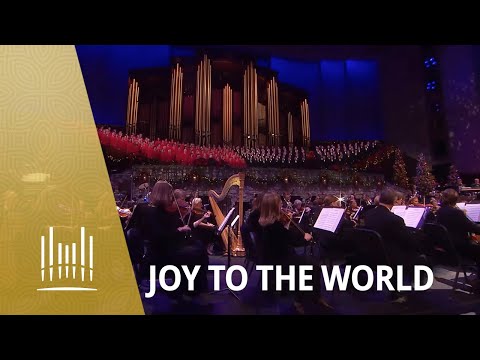
5. Joy to the World
Words: Isaac Watts, 1719 | Tune: "Antioch," arranged by Lowell Mason, 1800s | Origin: England | Language: English
"Joy to the World" is a hymn by the English minister Isaac Watts, who published it in 1719 as a version of Psalm 98 under the title "The Messiah's Coming and Kingdom." It describes the coming of Christ rather than telling the Bethlehem story, which makes it unusual among carols.
Most churches sing it to "Antioch," a tune the American composer Lowell Mason arranged in the 1800s and credited to George Frideric Handel. Handel scholars today dismiss the likeness to his oratorio Messiah as chance.
It is the most-published Christmas carol in North America: as of December 2009, the Dictionary of North American Hymnology counted it in 1,387 hymnals.
4. O Holy Night
Words: Placide Cappeau, 1847 | Music: Adolphe Adam, 1847 | Origin: France | Original language: French
"O Holy Night" began as a French poem, Cantique de Noël (also called Minuit, chrétiens), that Placide Cappeau wrote on 3 December 1847 during a stagecoach trip from Mâcon to Dijon. The composer Adolphe Adam set it to music within days.
The English version most people sing was written in 1855 by John Sullivan Dwight, an American critic and minister, who changed the French text more than a direct translation would require.
The carol was not always welcome in church. Some Catholic leaders objected to its tone and to its writers' politics, and the Ottawa archdiocese banned it from its churches on 22 September 1936.

3. Hark! The Herald Angels Sing
Words: Charles Wesley, 1739 | Music: Felix Mendelssohn, 1840 (adapted 1855) | Origin: England and Germany | Language: English
"Hark! The Herald Angels Sing" is a carol with words by the English hymn writer Charles Wesley and a melody by the German composer Felix Mendelssohn, who did not write the tune for Christmas. Wesley's poem first appeared in 1739 as "Hymn for Christmas-Day," with ten four-line verses.
In 1753 the preacher George Whitefield printed a shortened version that dropped two verses and changed the opening couplet. Whitefield's text is the basis of what we sing today.
The tune comes from Mendelssohn's Festgesang, written in 1840 for the 400th anniversary of the printing press. In 1855 the British organist William H. Cummings fitted a movement from it to Wesley's words. Wesley himself had intended the hymn to be sung to the tune of his Easter hymn "Christ the Lord Is Risen Today."

2. O Come, All Ye Faithful
Words and music: first printed by John Francis Wade, 1751 | Original language: Latin
"O Come, All Ye Faithful" is a carol that was written in Latin as Adeste Fideles and first published in 1751 in Cantus Diversi by John Francis Wade, an English Catholic living in France who worked as a music copyist. A Wade manuscript from the same year is kept at Stonyhurst College.
Who wrote it is still uncertain. Wade is credited with the first printing, while the words have also been attributed to St. Bonaventure, King John IV of Portugal and Cistercian monks. The English translation most people know began with the priest Frederick Oakeley in 1841.
One scholar, Professor Bennett Zon of Durham University, has suggested that the Latin hymn was a coded call for the exiled Stuart kings. The theory is unproven, and much of the text comes from Bible verses and the Nicene Creed, which some scholars take as a sign of a purely devotional purpose.

1. Silent Night
Words: Joseph Mohr, 1816 | Music: Franz Xaver Gruber, 1818 | Origin: Oberndorf bei Salzburg, Austria | Original language: German
"Silent Night" (Stille Nacht, heilige Nacht) is a carol written in German by the priest Joseph Mohr, who wrote the poem in 1816 in Mariapfarr, and composed by the schoolmaster Franz Xaver Gruber in 1818. It was first performed on 24 December 1818 at the Nikolauskirche in Oberndorf bei Salzburg, Austria.
Mohr brought the words to Gruber on Christmas Eve and asked him for a melody with guitar accompaniment for that night's mass. A manuscript in Mohr's handwriting, found in 1995, confirms that he wrote the poem in 1816.
The carol has been translated into about 300 languages. The most-sung English version comes from John Freeman Young, an Episcopal priest in New York City, who published it in 1859 using three of Mohr's six verses. In 2011 "Silent Night" was entered in Austria's national inventory of intangible cultural heritage.
It is also the most-recorded Christmas song. In 2017 Songdex, a song database run by the music-licensing company Music Reports, counted 137,315 recorded versions, ahead of "White Christmas" with 128,276. A small chapel now stands in Oberndorf on the site of the original church, which was demolished after repeated flood damage.

How these carols changed on the way to today
Almost every carol on this list was edited, shortened, translated or re-tuned before it reached the version people sing now. Whitefield cut and reworded Wesley, Dwight reshaped the French "O Holy Night," and John Freeman Young kept only three of Mohr's six verses of "Silent Night."
Others have two lives at once: "Away in a Manger" and "O Little Town of Bethlehem" are each sung to different tunes in the United States and in Britain. And "God Rest Ye Merry, Gentlemen" is so old that nobody knows who wrote it.